Letter D Formation Worksheet
Trace the capital D and the small d with numbered start points and direction arrows, then write them on your own.
Customize
More options
The preview updates as you change the settings.
How to write the letter D
The capital D is written in two strokes, and the small d in two strokes. The worksheet above is already set to this letter. It shows a model of each letter with green numbered start points and red direction arrows, then rows of dotted copies to trace and empty space to write on your own. Change the letter case, the size or the number of rows in the settings.
Capital D
Start at the top and draw a straight line down. Go back to the top and draw a big curve around to the right that comes back to the bottom of the line.
Small d
Draw a small circle, starting near the top right and going counter-clockwise. Then draw a tall straight line down the right side, from the top line to the base line, touching the circle.
Teaching tip for D
Start the small d with the circle, not the stick: circle first, then the tall line. The start is the same as a, g and q. That habit builds a different movement from b, which starts with the stick, and it is the best way to stop the two letters from swapping places.
The sound of D and words to practice
The letter D usually stands for the sound /d/ as in dog. Words to practice: dog, duck, door, drum, dinosaur, doll. Say each word, listen for the first sound and trace the letter. Try the beginning sounds worksheets to match the sound to pictures, or trace the words themselves with word tracing.
Letters that look alike
The letter D is easy to mix up with Letter Bb and Letter Qq. Practice them on separate days, one at a time, and say the starting point out loud each time before the pencil touches the paper.
More letters
Previous: Letter Cc · Next: Letter Ee · All letters A to Z
Frequently asked questions
Why does my child write d the wrong way round?
Reversing b and d is very common in young children. For most objects, such as a cup or a chair, facing left or right does not change what they are, so it takes time to learn that direction matters for letters. Practice the movement (circle first, then the stick) rather than correcting the shape. If reversals continue well past age seven, mention it to your child's teacher.
Free printable workbooks
Want a planned set instead of a single page? These free PDF workbooks use the same worksheets in a step-by-step order.
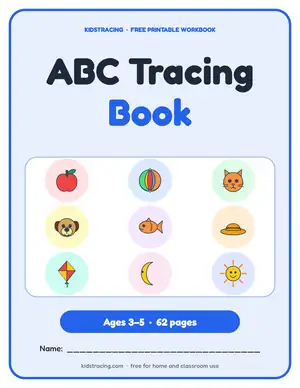
ABC Tracing Book
Every letter A to Z with numbered stroke arrows, a picture to color and a word to trace.
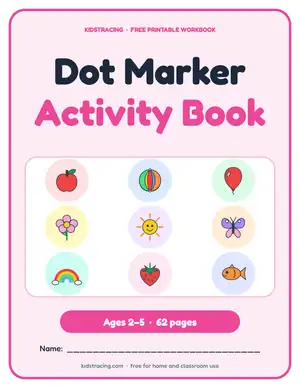
Dot Marker Activity Book
Big letters, numbers, shapes and pictures filled with circles for dot markers, stickers or fingertips.
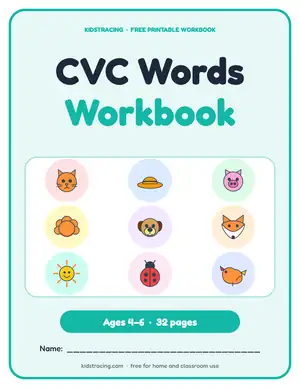
CVC Words Workbook
Read, build, trace and write short a, e, i, o and u words with pictures, sound boxes and sentences.
Related worksheet tools
Explore more: Handwriting and Tracing Worksheets for Kids · Preschool Worksheets · Kindergarten Worksheets · All free worksheet tools
Guides for parents and teachers: Letter Formation Order: Which Letters to Teach First · How to Teach a Child to Write Their Name · How to Teach Cursive Handwriting to Kids · Cursive Letters A to Z: A Simple Guide for Kids